
What Is a Water Heater Expansion Tank—and Do You Need One?
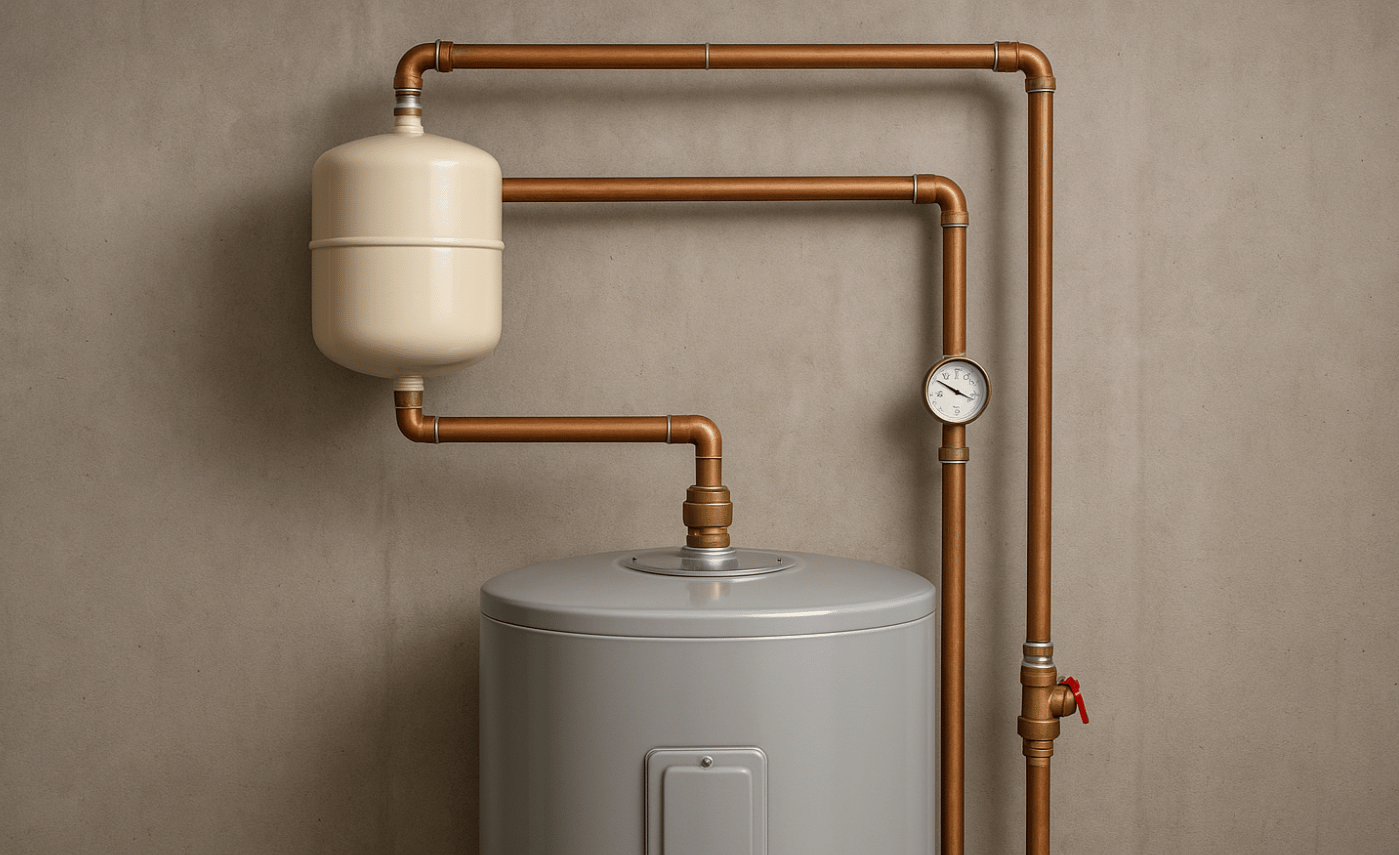
If a plumber has ever recommended installing an expansion tank on your water heater, you may have wondered: "What exactly is that, and why do I need it?"
You're not alone. Expansion tanks are one of the most misunderstood plumbing components, but they play an important role in protecting your home's plumbing system.
Let's break it down.
What Is an Expansion Tank?
An expansion tank is a small tank that is connected to your water heater. Its job is simple: it gives expanding water somewhere to go.
When water heats up, it expands. This is completely normal. The problem is that in many modern plumbing systems, there's nowhere for that extra volume of water to escape.
Without an expansion tank, the increased pressure can build up inside your pipes, water heater, and plumbing fixtures.
Think of an expansion tank as a pressure relief cushion for your plumbing system.
Why Does Water Expansion Matter?
Every time your water heater heats water, the volume increases slightly. In an open plumbing system, that pressure can move back into the municipal water supply.
However, many Texas homes have what's called a closed plumbing system due to:
Pressure reducing valves (PRVs)
Backflow prevention devices
Check valves
When these devices are present, the expanded water has nowhere to go.
The result?
Increased pressure in your plumbing system
Extra wear and tear on pipes and fixtures
Stress on your water heater
Higher risk of leaks
Over time, this pressure can lead to costly repairs.
Signs You May Need an Expansion Tank
You may benefit from an expansion tank if you've noticed:
Fluctuating water pressure
Dripping faucets
A leaking temperature and pressure relief valve (T&P valve)
Frequent plumbing leaks
A recently installed water heater
A pressure reducing valve on your home's water line
Even if you haven't noticed any symptoms, local plumbing codes may require one depending on your system.
Why Expansion Tanks Are Especially Important in Texas
Texas homeowners face unique plumbing challenges.
In areas like Austin, summer temperatures regularly climb into the triple digits. As temperatures rise, water heaters often work harder to meet household demand.
Additionally, many newer homes and recently updated plumbing systems include pressure-reducing devices designed to protect the municipal water supply. While these devices are beneficial, they also create closed systems where thermal expansion becomes a concern.
With rising temperatures and increasing water usage during the summer months, protecting your plumbing system from excess pressure becomes even more important.
What Happens If You Don't Have One?
Not every home requires an expansion tank, but when one is needed and missing, the consequences can add up over time.
Excess pressure may contribute to:
Premature water heater failure
Damaged pipe connections
Leaking fixtures
Running toilets
Appliance damage
Increased maintenance costs
A relatively inexpensive expansion tank can help prevent much more expensive plumbing repairs down the road.
How Long Do Expansion Tanks Last?
Most expansion tanks last between 5 and 10 years, depending on water quality, system pressure, and usage.
Like any plumbing component, they can wear out over time. If the internal bladder fails, the tank can no longer absorb pressure properly and may need replacement.
Regular plumbing inspections can help identify issues before they become bigger problems.
Should You Install an Expansion Tank?
The best way to know whether your home needs an expansion tank is to have a licensed plumber evaluate your plumbing system.
At 1st Home & Commercial Services, we can inspect your water heater, check your home's water pressure, and determine whether an expansion tank is recommended or required.
A small tank today could save you from major plumbing headaches tomorrow.
Need Help Protecting Your Plumbing System?
Whether you're installing a new water heater, experiencing water pressure issues, or simply want peace of mind, our team is here to help.
Contact 1st Home & Commercial Services today to schedule a plumbing inspection and make sure your home's plumbing system is protected for years to come.
